
If you’re searching “sell my veterinary practice,” you’re not casually browsing.
You’re likely weighing one of the most significant financial and professional decisions of your life.
I’ve been exactly where you are. I’ve owned, bought, and sold veterinary practices, and I've advised other veterinarians through the same process. What I’ve learned—sometimes the hard way—is this:
The outcome of a veterinary practice sale is determined long before the buyer appears.
This guide is written for U.S. veterinarians who want clarity, confidence, and control when selling their practice—without guesswork, misinformation, or costly mistakes.
Most vets don’t wake up one day and decide to sell. The decision builds over time.
Common reasons include:
Retirement or semi-retirement planning
Burnout from ownership and staffing pressure
Health or family priorities
An unsolicited corporate offer
Desire to de-risk personal finances
Wanting to stay clinical without ownership stress
Here’s the key CRO truth: You don’t need to sell now to start planning now.
In fact, practices that plan 12–36 months almost always sell for more—and with better terms.
👉 If you’re even thinking about selling in the next few years, the smartest first step is understanding what your practice is worth today.

Buyers—whether private vets or corporate groups—are not buying your history.
They are buying predictable future profit.
They focus on:
The more your practice can operate without you, the more valuable it becomes.
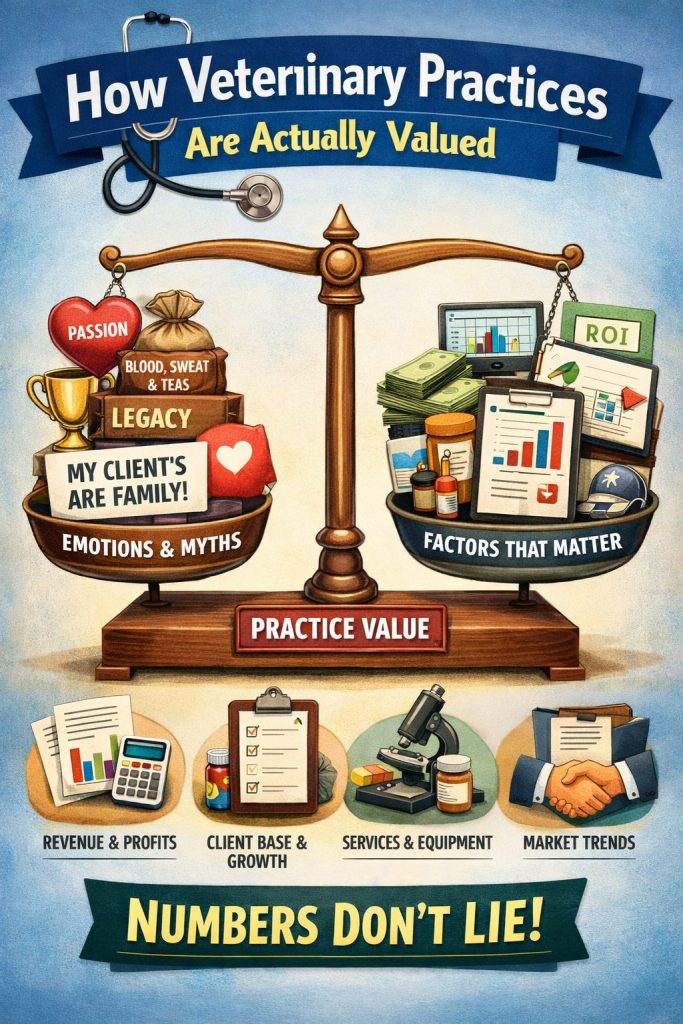
Forget rules of thumb and coffee-shop multiples.
A professional valuation looks at:
Most strong practices are valued primarily for income, with goodwill accounting for a significant portion of the price.
Goodwill = client loyalty, reputation, systems, and brand strength
The stronger these are independent of you personally, the higher your valuation.
Preparation is not paperwork—it’s strategy.
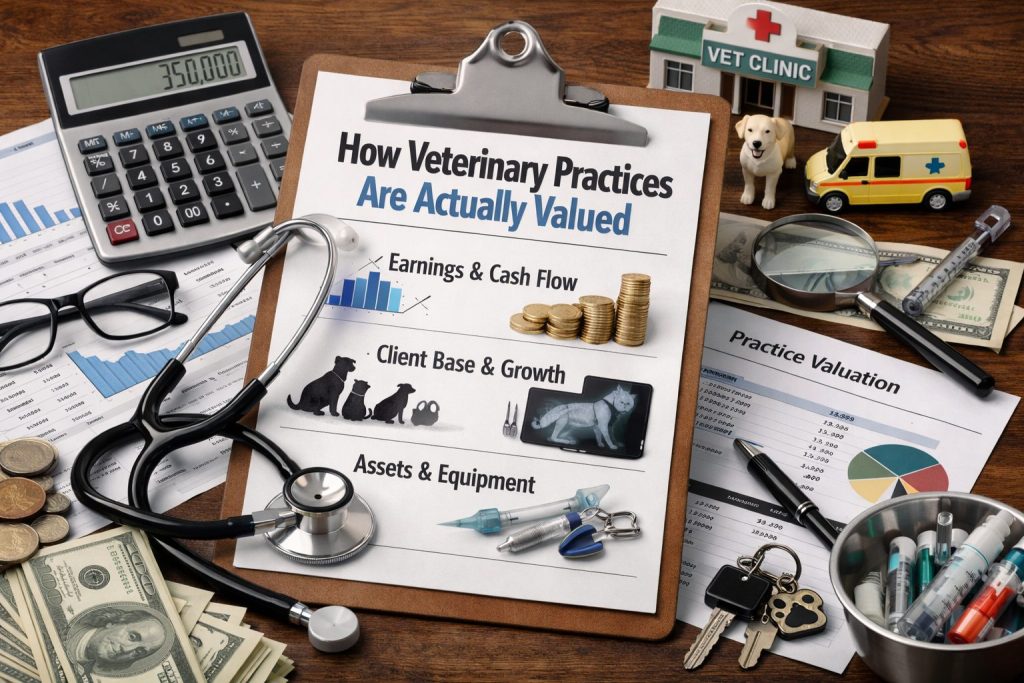
Buyers expect:
Messy books = discounted offers.
High-value practices have:
If your absence causes chaos, buyers will price that risk in.
Expect detailed due diligence. Common requests include:
Having these ready:

Best if you value:
Trade-offs:
Best if you value:
Trade-offs:
The “best” buyer is the one who aligns with your financial and lifestyle goals.
Many vets fixate on the headline number. Experienced sellers focus on:
A clean, well-structured deal often beats a higher—but riskier—price.
Poor tax planning can cost you more than a bad negotiation.
Key considerations:
Tax strategy should be discussed before you sign a letter of intent.
Most transactions follow this path:
Preparation and transparency are what keep deals from stalling—or collapsing.
Even successful sales can feel emotional.
The best transitions happen when:
Whether you stay on, step back gradually, or move on entirely, planning for after the sale is just as important as the sale itself.
Thinking about selling your veterinary practice—now or in the future?
The smartest next step is understanding what your practice is worth and what buyers would actually pay.
👉 Request a confidential veterinary practice valuation and exit consultation.
Most sales take 6–12 months, depending on preparation, valuation, and buyer type.
The best time is when profits are stable, associates are in place, and you’re not under pressure to sell.
You don’t have to—but experienced brokers often increase valuation, reduce risk, and shorten timelines.
Yes. Many deals include post-sale employment or medical director roles.
No. Disclosure timing should be strategic to avoid disruption and staff loss.
Yes, for well-run practices with strong cash flow and reduced owner dependence.
Over-reliance on the owner, inconsistent profits, poor records, and weak associate coverage.
A professional valuation provides a realistic market range, not a guess or a rule of thumb.


Unlock a free premium market valuation provided by the nation’s leading brokerage. With our 30-year track record, $2 billion in transactions, and a global team of 25+ experts, we find your ideal buyer in under 4 months, often above market value

