
If you’re thinking about selling your business, understanding Seller’s Discretionary Earnings (SDE) and add-backs is one of the most important steps you can take to increase the value of your business before it goes to market.
In our experience working with business owners preparing for sale, confusion around add-backs and SDE is one of the single biggest reasons sellers either overprice or undersell their business.
This guide explains:
This is explicitly written for owner-operated businesses, where SDE is the primary valuation metric.
Seller’s Discretionary Earnings represent the actual economic benefit a single owner derives from operating the business.
In simple terms:
SDE = Net Profit + Owner Compensation + Discretionary / Non-Recurring Expenses
SDE is used primarily for:
Buyers use SDE to answer one question:
“If I owned this business and replaced the current owner, what would I realistically earn?”
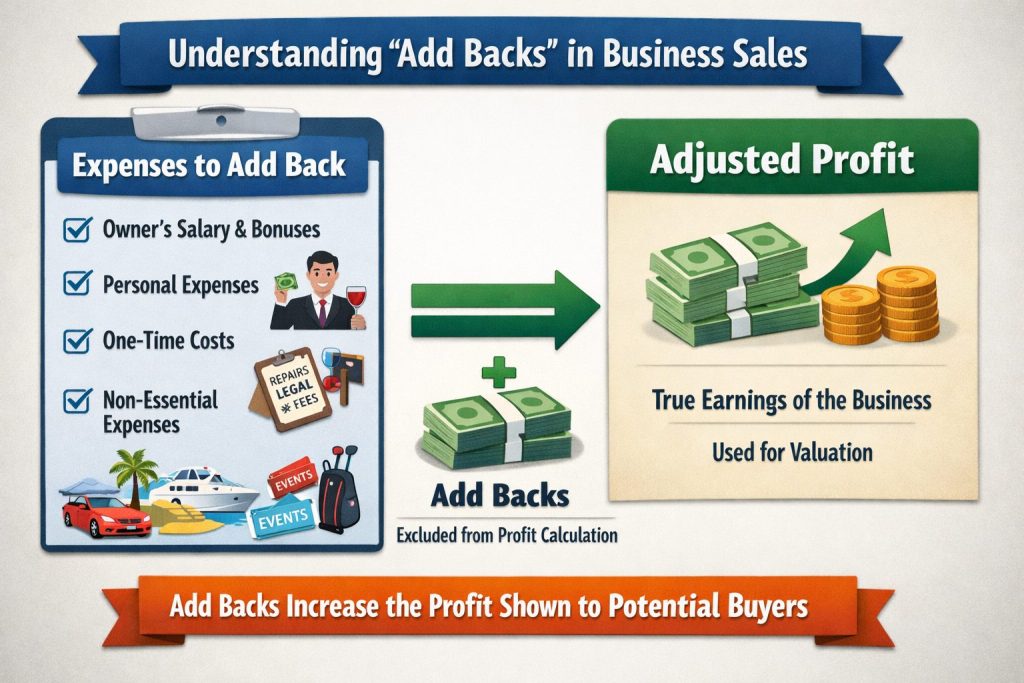
Add-backs are expenses shown in your accounts that do not reflect the ongoing cost of running the business under new ownership.
When calculated correctly, add-backs increase SDE — and therefore increase valuation.
However, poorly justified add-backs are one of the first things buyers and lenders challenge during due diligence.
Based on transactions we see regularly, these are the add-backs buyers typically accept:
If a buyer will replace you, your:
…are usually added back.
Example:
Owner salary: £90,000
Employer pension contribution: £6,000
Add-back: £96,000
These must be clearly identifiable and genuinely one-time.
Examples include:
Buyers will often ask:
“Will this expense exist again next year?”
If the answer is no — it’s usually acceptable.
Expenses run through the business for the owner’s benefit, such as:
These must be reasonable and provable, not aggressive.
If you pay yourself more than a market-rate replacement manager, the excess portion may be added back.
This is common where:
If you can’t prove it historically, it usually doesn’t count.
Most owner-run businesses are valued using a multiple of SDE.
Business Value ≈ SDE × Market Multiple
Typical SDE multiples depend on:
Even a modest increase in SDE can have a multiplied effect on value.
Example:
Increase SDE by £50,000
Apply a 3.5× multiple
Additional value created: £175,000
This is why getting add-backs right matters.
Based on deal experience, the strongest sellers do the following 6–12 months before selling:
Clean SDE builds buyer confidence — and confidence drives price.
During due diligence:
A professionally prepared SDE:
In many cases, proper SDE preparation adds more value than marketing alone.
Seller’s Discretionary Earnings is not an accounting trick — it’s a translation tool that helps buyers understand the real earning power of your business.
Handled properly, add-backs:
Handled poorly, they:
If you’re considering selling, SDE should be addressed early and carefully, not rushed at the point of sale.


Unlock a free premium market valuation provided by the nation’s leading brokerage. With our 30-year track record, $2 billion in transactions, and a global team of 25+ experts, we find your ideal buyer in under 4 months, often above market value

