Are you looking for a reliable business appraisal near me (you) or how to get a business appraised? Want to know the actual value of your business? Whether planning to sell, seeking investment, or simply curious, a professional appraisal can provide crucial insights.
Understanding your business's worth is vital to making informed decisions and maximizing opportunities. With a local appraisal service, you can gain clarity and confidence in your financial strategies. Discover the value of your enterprise today.
Absolutely! Conducting a business appraisal through an independent third party is crucial for obtaining an objective and fair valuation. Here's why:
Leveraging an independent third party for your business appraisal enriches the valuation's accuracy, enhances stakeholder confidence, and supports strategic business decisions.
Regarding appraisers, the government does not mandate licensing for all types. This lack of universal regulation means that, while many appraisers are qualified, not all are officially licensed. However, specific appraisals, such as real estate, might require specific certifications governed by state or federal standards.
While not all appraisers must be licensed by the government, opting for those affiliated with professional bodies or those with relevant certifications can help ensure that you're working with a competent professional.

Small business valuations and certified USPAP appraisals are critical in the business world. Here's how they add value:
Supporting SBA 7(a) Lending:
Guiding Sale or Acquisition Planning:
Facilitating Buy-Sell Agreements:
Estate and Gift Tax Planning:
Strategic Business Planning:
Certified USPAP appraisals ensure that these valuations meet the standards and ethics required in professional appraisals, providing reliability and accuracy essential for any financial or legal decision-making.

Professional business appraisal services offer owners numerous advantages. A skilled appraiser can boost your business's value by identifying and adding items excluded from profit and loss accounts. This process ensures a more accurate representation of the company's true worth. Professional valuation services cater to various business needs, giving owners essential insights into their financial health.
Business appraisal plays a crucial role in facilitating informed decision-making for owners. By obtaining an accurate valuation, businesses can confidently make strategic decisions backed by reliable financial data. Valuation services guide businesses in determining the best course of action, leading to more successful outcomes in various scenarios.
Precise business valuation is key to attracting potential investors. Accurate valuations create transparency and trust, increasing investment interest in the business. Professional valuation services enhance a company's appeal to investors by clearly understanding the business's actual value and growth potential.
Discover various industries that benefit from our comprehensive business valuations and equipment appraisals. Our expert valuations are available to meet your needs in manufacturing, transportation, construction, mining, marine operations, or the energy sector.
These services are crafted to cater specifically to private businesses looking to understand their market value. With specialized equipment appraisals, you can assess the worth of industrial machinery, including those used in day-to-day operations across various sectors.
Whether your assets range from heavy-duty mining equipment to essential marine machinery, detailed appraisals help you make informed financial decisions. Our clients gain valuable insights into their business's financial standing by evaluating each unique industry aspect.

Valuation specialists play a crucial role in determining a business's actual value. Their expertise ensures accurate assessments that are vital for decision-making. With in-depth knowledge of financial analysis and market trends, these specialists provide valuable insights.
To conduct precise valuations, experts need a blend of experience and qualifications. A strong background in finance, accounting, and business is essential. Certifications such as Certified Valuation Analyst (CVA) or Accredited in Business Valuation (ABV) enhance credibility.
Appraisers often specialize in distinct asset areas, allowing them to hone their expertise and deliver more accurate assessments. Some focus on business valuation and analyzing financial health and potential growth. Others may specialize in real estate and evaluate property market trends and values. Some concentrate on Machinery and Equipment, assessing the worth of industrial assets.
Furthermore, some appraisers adopt a comprehensive approach, offering total business appraisals. This involves integrating valuations from all asset areas, providing a holistic financial picture. By specializing, appraisers can tailor their services to meet specific client needs, ensuring precision and reliability in their assessments.
When choosing between local and nationwide firms for business appraisal services, consider the advantages each offers. Local firms provide personalized attention and a deep understanding of the regional market dynamics. On the other hand, nationwide firms bring extensive resources and expertise.
Nationwide firms often have access to a broader network of professionals and databases, allowing for more comprehensive analyses. Their exposure to diverse industries and markets enables them to provide insights from a broader perspective. For businesses seeking complex valuations, nationwide firms may offer specialized expertise that can be beneficial.
Discovering that your chosen appraiser isn’t fit to evaluate your business assets can be daunting. However, there are concrete steps you can take to rectify the situation swiftly and effectively:
By taking these proactive steps, you can secure an appraiser with the right expertise to assess your business accurately and effectively.

Business appraisal is crucial for determining a company's value, which aids in various financial decisions. Valuation services encompass assessing assets, liabilities, market position, and growth potential. The process involves detailed analysis to provide an accurate picture of a business's worth.
Valuation plays a pivotal role in mergers, acquisitions, and strategic planning. Understanding a business's value helps stakeholders make informed choices regarding investments and growth strategies. It also assists in resolving disputes and legal matters by objectively assessing a company's value.
Finding the right valuation service provider is essential for obtaining reliable and unbiased reports. Conducting a best-fit analysis involves evaluating potential valuation teams' expertise, experience, and reputation. Consider factors such as industry knowledge, track record, and client testimonials when selecting a valuation firm.
The credibility and accuracy of a valuation report depend on the proficiency of the team conducting the appraisal. Choosing a skilled and reputable valuation team ensures that the appraisal process is thorough and reflective of the true value of the business. Collaboration with experts who understand the nuances of different industries can significantly impact the quality and reliability of the valuation results.

When considering a business appraisal near me, the initial steps are crucial. Gather all financial records and engage with industry experts to understand market trends. These steps lay the foundation for an accurate valuation.
Next, finding a qualified appraiser is essential for a precise assessment. Start by searching for a business appraiser in your local area. Look for a business valuation expert affiliated with recognized organizations like the American Society of Appraisers. You can conduct an Internet search using terms like "business appraiser" along with your business's city or the nearest major city to narrow down local options.
For a more targeted approach, utilize the expert locator tool on the American Society of Appraisers' website. Filling out this form can connect you with professionals who meet high standards, ensuring you receive a reliable appraisal.
By combining thorough preparation with strategic searching, you'll be well-equipped to find the right expert to assess your business's worth.
Several documents are essential in a business appraisal near me. These include financial statements, tax returns, and asset listings. Each document plays a key role in accurately determining the business's value.
Accurate and complete documentation is paramount. It provides a clear picture of the company's financial health and operations. Without these documents, the valuation process may be incomplete or inaccurate.

The appraiser will gather financial documents from the business owner to begin the appraisal process. They then analyze these documents to understand the company's financial health. Next, they research industry trends and market conditions that impact the business.
Following this, the appraiser will choose the most suitable valuation method, whether it's the income approach, market approach, or asset-based approach. Once a process is selected, they calculate the value of the business using relevant data and formulas.
After determining the business's value, the appraiser prepares a detailed appraisal report outlining their findings and conclusions. This report is crucial for business owners to make informed decisions based on the valuation results.
When considering a business appraisal, it's essential to understand that the timeline can vary depending on various factors. The complexity of the business, availability of financial records, and stakeholder cooperation can all influence how long the appraisal process takes.
A comprehensive business appraisal can typically take a few weeks to a few months. The duration largely depends on the size of your business and the type of assets your company owns. The process might be quicker for smaller businesses with fewer assets, potentially taking just a few weeks. However, larger enterprises with complex asset portfolios may need several months for completion.
Business owners must be patient during this process, as rushing through it could lead to inaccurate valuation results. The thorough examination of assets, from tangible items like real estate and equipment to intangible assets such as intellectual property, plays a crucial role in determining the timeline.
Timely completion of the appraisal is vital for making well-informed decisions about the future of the business. Understanding the scope and depth required for your specific appraisal will help set realistic expectations and ensure that the results are accurate and valuable for strategic planning.
Confidentiality is paramount in the appraisal and consulting process, and we take several dedicated steps to maintain it. Here’s how we ensure your information remains secure and private:
Combining these measures ensures that your information is handled with the utmost care and discretion throughout the appraisal and consulting process.
Scheduling a valuation date with an appraiser is a key step in assessing the worth of your business assets. Here’s how you can efficiently navigate this process:
Depending on the complexity and size of your business, this process can vary significantly in duration. More extensive inventories or intricate asset types might extend the appraisal period from a few days to several months.

Working capital is essential in evaluating a business, representing its operational efficiency and liquidity. It includes current assets like cash, inventory, and accounts receivable. Adequate working capital ensures smooth business operations by covering short-term expenses.
Calculating working capital accurately is crucial for determining a business's actual value. Positive working capital signifies that the company can cover its short-term liabilities. Conversely, negative working capital may indicate potential financial issues and inefficiencies within the business.
Accurate working capital assessment is vital during business appraisal as it directly impacts the overall valuation. Investors and buyers closely examine working capital to understand a business's financial health and sustainability. An in-depth working capital analysis helps make informed decisions regarding investments or acquisitions.
Valuing equipment is integral to determining a business's worth, as it contributes significantly to its asset base. With certified, USPAP-compliant appraisal services, companies can trust that their equipment is priced to the highest standards. These services offer master-level expertise in assessing industrial plants, machinery, and heavy equipment across all major fixed asset classes.
Various methods, such as the cost approach, market approach, and income approach, are used to assess the value of equipment. The valuation process considers depreciation, maintenance costs, and market demand for similar equipment. This comprehensive approach ensures that appraisals reflect the assets' actual market value.
Accurate valuation is critical in the overall appraisal process, affecting the company's balance sheet and financial statements. A precise evaluation ensures that the equipment's worth is reflected correctly in the business's total value. Investors rely on accurate equipment valuation to make informed decisions about investing in or purchasing a business, knowing that the appraisal covers a broad spectrum of equipment types with certified precision.

Business appraisal reading materials provide insights into the valuation process, including methods like the income approach and market approach. These readings cover crucial aspects such as determining fair market value and assessing company performance metrics. The materials also emphasize the importance of considering industry trends and economic conditions when valuing a business.
Valuation services offer business owners a comprehensive analysis of their company's worth, aiding in strategic decision-making and potential growth opportunities. Understanding these valuation outcomes helps owners gauge their business's financial health and make informed choices about investments or sales.
Reviews are vital in guiding business owners towards reputable valuation service providers, offering insights into service quality. By reading reviews, owners can assess the expertise and professionalism of valuation teams, ensuring they entrust their business appraisal to competent professionals. Reviews also help understand past clients' experiences, providing valuable information for selecting the right valuation partner.
Business appraisal involves determining a company's value based on various factors such as assets, revenue, and market trends. This process is crucial for business owners to understand their financial standing.
By comprehending business appraisal, owners can make informed decisions about selling, expanding, or strategizing their operations. Business valuation includes assessing profits, losses, debts, and potential growth areas.
Engaging in business appraisal offers numerous benefits for owners. Understanding the true value of their business aids in negotiating deals with potential buyers or investors. Valuation services provide insights into areas that can be improved to increase profitability and efficiency. Regular appraisals help owners stay updated on their company's financial health and make strategic decisions accordingly.

To conduct a successful business appraisal, it is crucial to follow certain best practices. Gather all relevant financial documents, such as balance sheets and income statements.
Utilize multiple valuation methods, including the income approach, market approach, and asset-based approach, to ensure a comprehensive assessment.
Incorporating industry-specific data and trends can enhance the accuracy of the valuation. Engaging with experienced professionals or appraisers can provide valuable insights and expertise.
When preparing for a business valuation, it’s essential to have a candid conversation with the appraiser about various aspects of your business. Here’s what you should cover:
Covering these points provides the appraiser with a holistic view that supports an accurate and comprehensive valuation.

Navigating the sale or acquisition of a business can be daunting. That's where our business sales consulting services provide essential support for owners and buyers. Here's how we help:
By offering these comprehensive services, business sales consultants streamline the transaction process, optimize outcomes, and provide peace of mind for both parties.

When seeking business valuation services in Albuquerque and Yuma, you can expect our comprehensive services designed to meet various needs. Here's a breakdown of our services available in these regions:
Certified business valuations are crucial for understanding the value of your small business. They are essential for supporting decisions related to SBA 7(a) lending, planning for sales or acquisitions, and establishing buy-sell agreements.
Specialized appraisals can benefit businesses with significant investments in industrial plants, machinery, and heavy equipment. These appraisals are certified and comply with the Uniform Standards of Professional Appraisal Practice (USPAP), covering all major fixed asset classes.
Planning to sell your business or execute a seamless exit strategy? Expertise in business sales consulting provides invaluable support through every stage. This includes determining cash flow-supported pricing, structuring deals effectively, and conducting thorough financing analysis.
Backed by credentials from the American Society of Appraisers (ASA) and the International Society of Business Appraisers (ISBA), our valuation and consulting services in these areas offer in-depth expertise. Resources for commercial banking, public accounting, and SBA needs are included.
All evaluations and consultations are conducted under stringent confidentiality, ensuring that report writing and research maintain integrity. This guarantees USPAP compliance and authoritative and independent opinions of value that stakeholders can trust.

Our business and equipment valuation experts are dedicated to serving a broad geographic region, covering both Albuquerque and the expansive Rio Grande Valley. Whether you’re based in the heart of Albuquerque or the surrounding areas of the Rio Grande, our experienced appraisers are ready to meet your valuation needs.
You've learned how to get your business appraised and the crucial aspects of business valuation, from its significance to the types of valuations available. Choosing the right valuation specialists and understanding the appraisal process is key to accurately assessing your business's worth.
By comprehending a valuation's components and potential outcomes, you are better prepared to leverage its benefits, including the no-sale, no-fee advantage. As you prepare for the valuation process, remember that thorough preparation can significantly impact the results and provide valuable insights into your business's financial standing.
Now that you have a comprehensive understanding of business appraisal, take proactive steps to initiate the valuation process and make informed decisions based on the outcomes. Your business's value is a critical factor in various scenarios, so utilizing professional valuation services can be instrumental in achieving your strategic objectives.
Business valuation helps determine a business's worth, aiding in strategic decision-making, attracting investors, and ensuring fair transactions.
Select experts with relevant industry experience, certifications like CVA or ASA, positive client reviews, transparent pricing, and clear communication throughout the process.
Common types include asset-based, income-based (DCF), market approach (comparable companies), liquidation value, and intangible asset valuations tailored to your business needs.
The process typically involves data collection, financial analysis, selecting appropriate valuation methods, determining value ranges, thorough documentation, and presenting findings to stakeholders for informed decision-making.
A comprehensive report includes an executive summary, business description, financial analysis, valuation methods, assumptions made, risk factors considered, comparable company analysis if applicable, and final valuation conclusion.
Are you thinking, "Should I sell my business?" but you have not made any decision because you are unsure if it's the right move? Deciding whether to sell your business is a significant decision that requires careful thought and analysis.
Understanding the factors at play can help you make an informed choice. From financial considerations to personal goals, reasons, income, business operations, and business sales, various aspects need evaluation before leaping. " Stay tuned for insights that can guide you in making this crucial decision.
When considering whether to sell your business, could you identify the key motivations driving this decision? Evaluate both personal desires and financial factors that may be influencing your choice. Think about how selling your business aligns with your future goals and aspirations.
In assessing the decision to sell, it is crucial to analyze your business's historical performance. Compare past performance metrics with industry benchmarks to understand where your business stands. By evaluating historical data, you can gain insights into your business's strengths and weaknesses.
To make an informed decision about selling your business, it's essential to analyze its historical performance. Compare current financial and operational metrics with industry standards to gauge your business's health. Understanding how your business has performed over time can help you determine its value in the market.
Assessing the potential for improvement in business performance is vital when contemplating a sale. Identify areas where your business can grow and enhance its operations. By recognizing opportunities for improvement, you can maximize the value of your business before deciding whether to sell.
Looking ahead, forecast the future growth potential of your business if you choose to keep it. Consider upcoming market trends and changes that could impact your industry. By anticipating future developments, you can make an informed decision about its long-term viability.
When deciding whether to sell, evaluate how external factors may affect your business's future success. Business owners should consider economic conditions, regulatory changes, and other external influences that could impact their operations. Understanding these factors will help you assess the risks and opportunities associated with selling your business.
Aligning the decision to sell your business with personal aspirations is essential for a successful transition. Consider how selling will impact not only your finances but also your lifestyle and well-being. Ensure that selling aligns with your long-term objectives and contributes positively to your overall personal goals.
Determining your business's current market value is crucial before making any decisions. Compare your business value with industry benchmarks to gauge its standing. Understand the factors that influence the valuation, such as revenue trends and market demand.
Assessing your business's financial stability and profitability is essential. Review cash flow statements and balance sheets for insights into your company's financial performance. Identifying any financial risks that could impact a potential sale is vital for informed decision-making.
Evaluating the growth opportunities available for your business is key in assessing its prospects. Consider potential strategies to enhance growth, such as expanding into new markets or introducing innovative products/services. Assess the scalability of your business model to determine its ability to grow sustainably over time.
Recognize signs of burnout such as exhaustion, lack of motivation, and decreased productivity. These can signal that it might be the right time to sell your business. Evaluate how burnout affects your decision-making and overall performance. Addressing burnout is crucial before deciding to sell.
Analyze the current market conditions within your industry to determine if it's the right time to sell. Consider how trends like consumer preferences and economic factors may impact the sale of your business. Evaluate the demand for businesses similar to yours in the market.
Assess the competitive environment in which your business operates by identifying key competitors and their market positions. Understand how your business differentiates itself in the competitive landscape. This analysis helps you gauge whether selling now aligns with the competitive scenario.
Selling your business can result in a substantial financial gain. Calculate the potential profits carefully to ensure a lucrative deal. Evaluate the tax implications and net proceeds from the sale to make an informed decision. Ensure that the financial gain aligns with your expectations and long-term financial goals.
Exploring new opportunities is crucial after selling your business. Consider the doors that may open up for you post-sale. Reflect on how selling your business could lead to exciting new ventures and projects. Evaluate the feasibility of pursuing these opportunities and how they align with your professional aspirations.
Anticipate significant lifestyle changes when selling your business. Reflect on the impact it will have on your daily routine and overall well-being. Consider the newfound freedom and flexibility that may come with selling, allowing you to pursue other interests or spend more time with loved ones. Evaluate how these lifestyle changes align with your personal goals and aspirations.
Owning a business can create a deep emotional bond between you and your company. The hard work and dedication poured into building the business can lead to a strong emotional connection. As a business owner, it's essential to acknowledge this emotional attachment.
Considering selling your small business might trigger conflicting emotions due to its sentimental value. Reflect on how these emotional ties might impact your decision-making process. Your emotional connection with the business could heavily influence your choice to sell or keep it.
When contemplating selling your profitable business, take time to evaluate the significance of emotional attachment in the entire selling journey. Understanding how emotions affect this decision is crucial for making a well-informed choice.
After selling your business, there could be numerous growth opportunities waiting for you. Selling your small business might clear the path for fresh ventures and new growth prospects, which can lead to personal and professional advancement.
By parting ways with your company, you open doors to exciting avenues for growth and development. Consider how selling your business could pave the way for broader horizons and enhanced career opportunities. Embracing change through selling might propel you toward unforeseen growth potential.
After selling, assess the potential for personal and professional growth that may arise from letting go of your existing venture. Evaluating these growth opportunities post-sale can provide valuable insights into the benefits of moving on from your current business.
Reflect on the legacy you wish to establish through your business endeavors. Selling your company will undoubtedly have an impact on the legacy you leave behind. Contemplate how this decision aligns with the legacy goals you've set for yourself.
As you consider selling, evaluate how this move will shape the narrative of your overall legacy. Assessing how your small business operations contribute to your desired legacy can help clarify whether selling is in line with your long-term aspirations.
Contemplate how each aspect of your business contributes to shaping the legacy you envision for yourself and future generations.
 Develop strategies to find potential buyers for your business. Utilize online platforms, industry connections, and networking events to reach out to potential buyers. Evaluate each buyer's financial capability and experience in running a business.
When seeking potential buyers, consider various channels such as business brokers, online marketplaces, and industry-specific forums. Diversifying your approach can increase your chances of finding the right buyer for your business. Look for buyers who align with your company's values and vision.
Evaluate the criteria that matter most to you when selecting a buyer. Consider factors such as their financial stability, industry expertise, and plans for the business. Finding a buyer who shares your passion can ensure a smoother transition after the sale.
Plan negotiation tactics carefully to secure the best deal for your business. Prepare by setting clear goals and understanding your bottom line. Anticipate different negotiation scenarios and be ready to adapt your strategy accordingly.
Consider various negotiation outcomes, including price adjustments, payment terms, and post-sale agreements. Stay open to compromises while staying firm on crucial aspects of the deal. Flexibility in negotiations can lead to mutually beneficial agreements.
Evaluate the importance of flexibility and compromise during negotiations. Recognize that both parties may need to make concessions to reach a successful deal. Maintaining a positive relationship with the buyer throughout negotiations is key to achieving a favorable outcome.
Understand the legal implications involved in selling your business. Seek guidance from legal experts to navigate complex legal processes such as contracts, licenses transfer, and tax implications. Ensure compliance with regulations specific to your industry.
Consulting with legal professionals can help identify potential risks and liabilities associated with the sale of your business. Addressing these issues proactively can prevent legal disputes or complications post-sale. Protecting yourself legally is crucial for a smooth transition of ownership.
Evaluate potential legal risks associated with the sale of your business, such as pending lawsuits, intellectual property rights, or contractual obligations. Mitigate these risks by conducting thorough due diligence and ensuring all legal requirements are met before finalizing the sale.
After selling your business, develop a financial plan to manage the proceeds effectively. Consider investment options such as stocks, bonds, or real estate. Evaluate long-term financial implications like taxes and retirement savings.
Reflect on how selling your business impacts your personal fulfillment. Consider if achieving personal goals like travel or hobbies contributes to your fulfillment. Evaluate the role of personal satisfaction in your decision-making process.
Explore potential new ventures post-sale, such as starting a new business or investing in other ventures. Selling your business could provide funds for these new opportunities. Evaluate the feasibility and risks involved in pursuing these new ventures.

Determining the accurate pricing strategy is crucial when selling your business. Take into account market trends and various valuation methods to set a competitive price. This will significantly impact the attraction of potential buyers.
Making strategic decisions requires a comprehensive evaluation of your business. Analyze the long-term consequences of selling your business and ensure that your choices align with your overall business goals.
Enhancing the appeal of your business is essential for attracting potential buyers. Identify ways to improve branding, marketing strategies, and operational efficiency. Enhancing appeal can positively influence the speed and success of the selling process.
When deciding whether to sell your business, ensure it aligns with your broader goals and objectives. Consider how the sale fits into your strategic vision for the future. Evaluate the alignment between your goals and the decision to sell.
Prepare your business for sale by ensuring it is market-ready. Consider necessary improvements to make your business more attractive to buyers. Evaluate the timing of the sale based on market readiness indicators.
Seek advice from industry experts and professionals when considering selling your business. Consult with financial advisors, legal experts, and business brokers. Evaluate the expertise and experience of professionals to guide your selling process.
In the end, deciding whether to sell your business is a significant choice that requires careful consideration. Understanding the value of your business, recognizing the signs indicating it's time to sell, and weighing the reasons for and against selling are crucial steps in this process. Once you have made the decision, navigating the selling process and planning for life after the sale are equally important.
Now that you have a better grasp of the factors involved in selling your business, take the time to reflect on your unique situation. Consider seeking professional advice if needed and proceed with confidence in your decision. Remember, your business journey is a personal one, and only you can determine the best path forward for you and your business.
For business owners thinking of selling their businesses, it's important to start preparing early. The process of selling a business can be complex, and there are many things to consider.
One of the first things lenders will examine is your credit history. A solid credit profile significantly enhances your eligibility for SBA loans. Ensure your credit score is in excellent shape. Address any outstanding debts, late payments, or discrepancies in your credit report. Demonstrating responsible financial management gives lenders confidence in your ability to manage a business loan.
A well-crafted business plan is more than just a document; it’s your roadmap to success. Lenders will want to see a detailed plan that outlines your business goals, strategies, financial projections, and how you intend to use the loan. This demonstrates your commitment to the business and your ability to manage it effectively. Consider including a thorough market analysis, marketing strategies, and a clear exit plan.
SBA lenders value experience in the industry you’re entering. Showcase your knowledge and expertise in your business plan. Highlight any relevant experience you’ve gained from previous positions, entrepreneurial ventures, or specific training. The more you can demonstrate that you’re well-prepared to run the business successfully, the more attractive you’ll be as a loan applicant.
In addition to your credit history, lenders will want to review your financial statement. Provide a clear and accurate picture of your assets, liabilities, and net worth. Be transparent about your financial situation, as lenders appreciate honesty and thoroughness in this regard.
Most SBA loans require a down payment, typically around 10% to 20% of the purchase price. Having a substantial down payment demonstrates your commitment to the business and reduces the lender’s risk. Prepare your finances to ensure you have the required down payment readily available when you apply for the loan.
Lenders will require extensive documentation to process your SBA loan application. Be proactive and organized when gathering the necessary paperwork. This can include tax returns, financial statements, business contracts, and any other relevant documents. Being well-prepared can expedite the application process and demonstrate your professionalism to lenders.
Not all lenders are created equal when it comes to SBA loans. Research and select a lender experienced in SBA lending and who understands the nuances of buying a business. Building a relationship with your lender can also work in your favor. They can provide guidance throughout the process and increase your chances of approval.
Navigating the complexities of an SBA loan can be challenging. Consider enlisting the help of professionals, including business brokers and financial advisors, who are experienced in facilitating these transactions. Their expertise can streamline the process and improve your chances of success.
The SBA loan application process can be time-consuming. Be patient and persistent in following up with your lender and promptly provide any requested information. Your determination to secure the loan can work in your favor.
In conclusion, securing an SBA 7(a) or 504 loan to buy a business requires careful preparation and diligence. By building a strong credit profile, developing a comprehensive business plan, demonstrating your expertise, and working with the right professionals, you can significantly increase your chances of obtaining the financing you need to acquire your dream business.
Remember that patience and persistence are key, and a well-organized approach will help you navigate the process successfully.
Minimizing tax implications when selling your business is a crucial aspect of maximizing your overall proceeds from the sale. Here are several ways to mitigate tax liabilities:
One of the most significant tax considerations is how you structure the sale. You can typically choose between an asset sale and a stock sale:
Asset Sale: In an asset sale, you sell the individual assets of your business (e.g., equipment, inventory, customer lists) to the buyer. This can allow for better allocation of the purchase price among various assets, potentially reducing the tax burden. However, keep in mind that you may have to pay taxes at the corporate level for any gains on the sale of assets. Consult with a tax advisor to optimize this structure.
Stock Sale: In a stock sale, you sell the ownership (stock or shares) of your business. This may lead to favorable capital gains
If your business meets certain criteria, you may be eligible for Qualified Small Business Stock (QSBS) benefits. Under Section 1202 of the Internal Revenue Code, you can potentially exclude a portion of your capital gains from the sale of QSBS. To qualify, your business must be a C corporation, meet active business requirements, and satisfy other criteria. Consulting with a tax professional is essential to determine eligibility and benefits.
If you invest the proceeds from the sale in a qualified Opportunity Zone Fund, you can potentially defer and reduce capital gains tax. Opportunity Zones are designated economically distressed areas where investments can offer significant tax benefits. This strategy can be complex and requires adherence to specific regulations, so it’s vital to consult with a tax advisor.
An installment sale allows you to defer the recognition of a portion of your gain over several years. Instead of receiving the full sales price upfront, you agree to receive payments over time. This can help spread the tax liability and reduce your overall tax rate, as you’ll only pay taxes on the payments received in a given year.
While typically associated with real estate, a Section 1031 exchange can also be used for certain types of personal property. This provision allows you to defer capital gains tax by reinvesting the proceeds from the sale into a similar business or investment property. Like other tax strategies, it’s essential to consult with a tax advisor to ensure eligibility and compliance with IRS rules.
Estate planning strategies can help minimize the impact of capital gains tax when selling a business. Gifting shares of your business to family members or placing them in a family limited partnership can reduce the overall tax liability upon sale. Be sure to work with an estate planning attorney to structure these arrangements properly.
Depending on your industry and location, there may be specific tax credits or incentives available to business owners. Research and consider any federal or state programs that could reduce your tax burden.
Converting your business into an ESOP can be a tax-efficient exit strategy. ESOPs are employee benefit plans that buy, hold, and sell company stock on behalf of employees. When structured properly, the sale of your business to an ESOP can result in significant tax benefits.
It cannot be stressed enough: consulting with a qualified tax professional who specializes in business sales and has a deep understanding of your specific situation is crucial. Tax laws and regulations are complex and subject to change. A tax advisor can provide personalized guidance, help you navigate the complexities of tax planning, and ensure you make informed decisions that minimize your tax implications legally and effectively.
Ensure that you maintain thorough records of the entire sale process and any tax planning strategies employed. This includes documenting the sale structure, any tax elections, and the use of any exemptions or credits. Proper documentation is essential in case of an IRS audit.
Remember that tax planning should be an integral part of your overall business exit strategy. By employing these strategies and working closely with a tax professional, you can optimize your tax position and retain more of the proceeds from the sale of your business.
Selling a business is a monumental decision that requires careful planning and insight. From ensuring your financial records are in order to marketing your business effectively, each step of the process plays a critical role in getting the best price for your business. In this comprehensive guide, I will walk you through the step-by-step process of preparing your business for sale, with practical examples and input from both accountants and tax professionals. Additionally, I will demonstrate how an experienced broker, such as A E Business Brokers, can add exceptional value at each stage, ensuring the smoothest and most profitable transition possible.
Before beginning the sale process, determining the true value of your business is paramount. A realistic valuation not only guides your asking price but also helps you set expectations for the sale process.
A: Business valuation involves several methods:
Broker’s Insight (A E Business Brokers): "An experienced broker can provide a comprehensive valuation based on a deeper understanding of your industry and access to an extensive database of comparable businesses. At A E Business Brokers, we ensure the valuation considers the unique aspects of your business, such as market position and buyer preferences.
Take John’s Manufacturing Company, which sold for £4.2 million. By using A E Business Brokers’ market knowledge and access to proprietary databases of recent sales, John’s business was valued at a premium compared to standard industry multiples. The valuation helped set an asking price that attracted a buyer willing to pay more than expected.
A key part of selling a business is ensuring your financial records are in excellent shape. Buyers want transparency, and your financials should reflect your business’s true profitability.
A: The necessary documents include:
Tax Professional’s Input: "It’s crucial to have your books in order, as discrepancies or gaps in financials can raise red flags for potential buyers."
Broker’s Insight (A E Business Brokers): "At A E Business Brokers, we assist with organizing and reviewing your financial documents, ensuring they are presented in a way that maximizes the perceived value of your business. We also work with accountants to ensure that the financial picture you present is both clean and compelling."
When Samantha’s Web Design Firm was preparing for sale, her financial records were incomplete. Thanks to the guidance from A E Business Brokers, she worked with an experienced accountant who cleaned up her books, highlighting consistent revenue and profit growth. This clean financial presentation allowed her to negotiate a sale price 20% higher than she originally anticipated.
Any outstanding debts, obligations, or legal matters can complicate a sale and reduce the attractiveness of your business to potential buyers. Resolving these issues beforehand is critical.
A: Buyers will look closely at:
Broker’s Insight (A E Business Brokers): "An experienced broker helps identify and address any potential issues before they become roadblocks. At A E Business Brokers, we’re experts at recognizing the concerns that buyers may have and addressing them proactively, saving you time and ensuring a smoother sale process."
Tom’s Coffee Shop Chain was struggling with an ongoing lease dispute. A E Business Brokers advised Tom to address the issue before listing the business, significantly improving its attractiveness to buyers. After resolving the lease issue and presenting the business in a legally sound manner, Tom was able to sell the chain at a higher price and with greater buyer confidence.
A streamlined, efficient operation is far more appealing to potential buyers. Buyers want to know that they can take over and continue operations without disruption.
A: Key focus areas include:
Broker’s Insight (A E Business Brokers): "An experienced broker can help identify operational weaknesses and suggest ways to improve the efficiency of your business. At A E Business Brokers, we help position your business as one that is easy to transition into, giving potential buyers confidence in its continued success."
Ellen’s Fitness Studio had a great client base but inefficient scheduling and a lack of standardized employee training. With A E Business Brokers’ advice, Ellen implemented an automated booking system and standardized training procedures. These changes increased the business’s operational efficiency, which ultimately helped Ellen secure a 15% increase in the sale price.
Buyers will also scrutinize the legal structure and ownership rights of the business. Ensuring your business is legally sound and well-documented can save a lot of headaches.
A: You’ll need to address:
Tax Professional’s Input: "Different business structures have different tax implications. Having a lawyer and accountant involved early in the process can help avoid unforeseen tax liabilities."
Broker’s Insight (A E Business Brokers): "At A E Business Brokers, we work with your legal and accounting team to ensure that the ownership structure, IP, and business assets are clearly defined and transferable. This legal clarity is crucial to achieving the best deal possible."
When Richard sold his tech startup, A E Business Brokers helped him ensure that his software product’s intellectual property was properly protected and easily transferable to the buyer. This added significant value to the deal, and the business was sold for a premium price.
Buyers are often looking for businesses that offer room for growth. If your business is already scalable, it can command a higher price.
A: Focus on:
Broker’s Insight (A E Business Brokers): "As a broker, we can help identify areas of scalability and emphasize them to potential buyers. We also help you put processes in place that demonstrate long-term growth potential, which can increase the business’s appeal."
When Beth’s SaaS company was up for sale, A E Business Brokers helped her streamline the lead generation process and expand into new geographic markets. This scalability helped her secure double her original asking price.
A clear exit strategy will help you navigate the sale process more smoothly and ensure you maximize the value of your business.
A: Your exit strategy should cover:
Broker’s Insight (A E Business Brokers): "An experienced broker can help you develop a clear exit strategy that aligns with your goals. We also provide insight into how best to structure your sale to minimize tax liabilities and ensure that you exit on your terms."
Julia sold her bakery business with A E Business Brokers’ guidance. The exit strategy included a six-month post-sale involvement, allowing Julia to train the new owner and maintain customer relationships. This smooth transition made her business more attractive to buyers and helped secure a higher sale price.
Once everything is in place, it’s time to market your business to attract potential buyers. Effective marketing can make a world of difference.
A: Consider:
Broker’s Insight (A E Business Brokers): "We have a large network of pre-qualified buyers and know how to craft a compelling marketing package that highlights your business’s strengths. This marketing approach can significantly shorten the sale process and help you get a better price."
David’s Wholesale Distribution Company was marketed strategically by A E Business Brokers. The combination of online listings, direct outreach to interested parties, and network connections led to a buyer being found within six weeks.
Preparing your business for sale is a comprehensive and strategic process that requires careful attention to detail. With the guidance of an experienced broker like A E Business Brokers, you can navigate each step effectively, maximizing the value of your business and ensuring a smooth transaction. From valuation and financial record organization to marketing and post-sale transition, a skilled broker can provide invaluable support at every stage.
If you're thinking of selling your business, don't hesitate to contact A E Business Brokers. Our expertise, industry knowledge, and large network of buyers can help you achieve the best possible sale outcome.
The most common method of valuing a business is the free market approach. This approach looks at what similar businesses have sold for in the past and uses that information to value your business.
This method is most often used when businesses are being sold through a business broker.
One of the first things lenders will examine is your credit history. A solid credit profile significantly enhances your eligibility for SBA loans. Ensure your personal credit score is in excellent shape. Address any outstanding debts, late payments, or discrepancies in your credit report. Demonstrating responsible financial management gives lenders confidence in your ability to manage a business loan.
A well-crafted business plan is more than just a document; it’s your roadmap to success. Lenders will want to see a detailed plan that outlines your business goals, strategies, financial projections, and how you intend to use the loan. This demonstrates your commitment to the business and your ability to manage it effectively. Consider including a thorough market analysis, marketing strategies, and a clear exit plan.
SBA lenders value experience in the industry you’re entering. Showcase your knowledge and expertise in your business plan. Highlight any relevant experience you’ve gained from previous positions, entrepreneurial ventures, or specific training. The more you can demonstrate that you’re well-prepared to run the business successfully, the more attractive you’ll be as a loan applicant.
In addition to your credit history, lenders will want to review your personal financial statement. Provide a clear and accurate picture of your assets, liabilities, and net worth. Be transparent about your financial situation, as lenders appreciate honesty and thoroughness in this regard.
Most SBA loans require a down payment, typically around 10% to 20% of the purchase price. Having a substantial down payment demonstrates your commitment to the business and reduces the lender’s risk. Prepare your finances to ensure you have the required down payment readily available when you apply for the loan.
Lenders will require extensive documentation to process your SBA loan application. Be proactive and organized when gathering the necessary paperwork. This can include tax returns, financial statements, business contracts, and any other relevant documents. Being well-prepared can expedite the application process and demonstrate your professionalism to lenders.
Not all lenders are created equal when it comes to SBA loans. Research and select a lender experienced in SBA lending and who understands the nuances of buying a business. Building a relationship with your lender can also work in your favor. They can provide guidance throughout the process and increase your chances of approval.
Navigating the complexities of an SBA loan can be challenging. Consider enlisting the help of professionals, including business brokers and financial advisors, who are experienced in facilitating these transactions. Their expertise can streamline the process and improve your chances of success.
The SBA loan application process can be time-consuming. Be patient and persistent in following up with your lender and promptly provide any requested information. Your determination to secure the loan can work in your favor.
In conclusion, securing an SBA 7(a) or 504 loan to buy a business requires careful preparation and diligence. By building a strong credit profile, developing a comprehensive business plan, demonstrating your expertise, and working with the right professionals, you can significantly increase your chances of obtaining the financing you need to acquire your dream business.
Remember that patience and persistence are key, and a well-organized approach will help you navigate the process successfully.
Minimizing tax implications when selling your business is a crucial aspect of maximizing your overall proceeds from the sale. Here are several ways to mitigate tax liabilities:
One of the most significant tax considerations is how you structure the sale. You can typically choose between an asset sale and a stock sale:
Asset Sale: In an asset sale, you sell the individual assets of your business (e.g., equipment, inventory, customer lists) to the buyer. This can allow for better allocation of the purchase price among various assets, potentially reducing the tax burden. However, keep in mind that you may have to pay taxes at the corporate level for any gains on the sale of assets. Consult with a tax advisor to optimize this structure.
Stock Sale: In a stock sale, you sell the ownership (stock or shares) of your business. This may lead to favorable capital gains
If your business meets certain criteria, you may be eligible for Qualified Small Business Stock (QSBS) benefits. Under Section 1202 of the Internal Revenue Code, you can potentially exclude a portion of your capital gains from the sale of QSBS. To qualify, your business must be a C corporation, meet active business requirements, and satisfy other criteria. Consulting with a tax professional is essential to determine eligibility and benefits.
If you invest the proceeds from the sale in a qualified Opportunity Zone Fund, you can potentially defer and reduce capital gains tax. Opportunity Zones are designated economically distressed areas where investments can offer significant tax benefits. This strategy can be complex and requires adherence to specific regulations, so it’s vital to consult with a tax advisor.
An installment sale allows you to defer the recognition of a portion of your gain over several years. Instead of receiving the full sales price upfront, you agree to receive payments over time. This can help spread the tax liability and reduce your overall tax rate, as you’ll only pay taxes on the payments received in a given year.
While typically associated with real estate, a Section 1031 exchange can also be used for certain types of personal property. This provision allows you to defer capital gains tax by reinvesting the proceeds from the sale into a similar business or investment property. Like other tax strategies, it’s essential to consult with a tax advisor to ensure eligibility and compliance with IRS rules.
Estate planning strategies can help minimize the impact of capital gains tax when selling a business. Gifting shares of your business to family members or placing them in a family limited partnership can reduce the overall tax liability upon sale. Be sure to work with an estate planning attorney to structure these arrangements properly.
Depending on your industry and location, there may be specific tax credits or incentives available to business owners. Research and consider any federal or state programs that could reduce your tax burden.
Converting your business into an ESOP can be a tax-efficient exit strategy. ESOPs are employee benefit plans that buy, hold, and sell company stock on behalf of employees. When structured properly, the sale of your business to an ESOP can result in significant tax benefits.
It cannot be stressed enough: consulting with a qualified tax professional who specializes in business sales and has a deep understanding of your specific situation is crucial. Tax laws and regulations are complex and subject to change. A tax advisor can provide personalized guidance, help you navigate the complexities of tax planning, and ensure you make informed decisions that minimize your tax implications legally and effectively.
Ensure that you maintain thorough records of the entire sale process and any tax planning strategies employed. This includes documenting the sale structure, any tax elections, and the use of any exemptions or credits. Proper documentation is essential in case of an IRS audit.
Remember that tax planning should be an integral part of your overall business exit strategy. By employing these strategies and working closely with a tax professional, you can optimize your tax position and retain more of the proceeds from the sale of your business.
One of the first things lenders will examine is your credit history. A solid credit profile significantly enhances your eligibility for SBA loans. Ensure your personal credit score is in excellent shape. Address any outstanding debts, late payments, or discrepancies in your credit report. Demonstrating responsible financial management gives lenders confidence in your ability to manage a business loan.
A well-crafted business plan is more than just a document; it’s your roadmap to success. Lenders will want to see a detailed plan that outlines your business goals, strategies, financial projections, and how you intend to use the loan. This demonstrates your commitment to the business and your ability to manage it effectively. Consider including a thorough market analysis, marketing strategies, and a clear exit plan.
SBA lenders value experience in the industry you’re entering. Showcase your knowledge and expertise in your business plan. Highlight any relevant experience you’ve gained from previous positions, entrepreneurial ventures, or specific training. The more you can demonstrate that you’re well-prepared to run the business successfully, the more attractive you’ll be as a loan applicant.
In addition to your credit history, lenders will want to review your personal financial statement. Provide a clear and accurate picture of your assets, liabilities, and net worth. Be transparent about your financial situation, as lenders appreciate honesty and thoroughness in this regard.
Most SBA loans require a down payment, typically around 10% to 20% of the purchase price. Having a substantial down payment demonstrates your commitment to the business and reduces the lender’s risk. Prepare your finances to ensure you have the required down payment readily available when you apply for the loan.
Lenders will require extensive documentation to process your SBA loan application. Be proactive and organized in gathering the necessary paperwork. This can include tax returns, financial statements, business contracts, and any other relevant documents. Being well-prepared can expedite the application process and demonstrate your professionalism to lenders.
Not all lenders are created equal when it comes to SBA loans. Research and select a lender experienced in SBA lending and who understands the nuances of buying a business. Building a relationship with your lender can also work in your favor. They can provide guidance throughout the process and increase your chances of approval.
Navigating the complexities of an SBA loan can be challenging. Consider enlisting the help of professionals, including business brokers and financial advisors, who are experienced in facilitating these transactions. Their expertise can streamline the process and improve your chances of success.
The SBA loan application process can be time-consuming. Be patient and persistent in following up with your lender and providing any requested information promptly. Your determination to secure the loan can work in your favor.
In conclusion, securing an SBA 7(a) or 504 loan to buy a business requires careful preparation and diligence. By building a strong credit profile, developing a comprehensive business plan, demonstrating your expertise, and working with the right professionals, you can significantly increase your chances of obtaining the financing you need to acquire your dream business. Remember that patience and persistence are key, and a well-organized approach will help you navigate the process successfully.
What are the ways I can minimize tax implications when selling my business?
Minimizing tax implications when selling your business is a crucial aspect of maximizing your overall proceeds from the sale. Here are several ways to mitigate tax liabilities:
One of the most significant tax considerations is how you structure the sale. You can typically choose between an asset sale and a stock sale:
Asset Sale: In an asset sale, you sell the individual assets of your business (e.g., equipment, inventory, customer lists) to the buyer. This can allow for better allocation of the purchase price among various assets, potentially reducing the tax burden. However, keep in mind that you may have to pay taxes at the corporate level for any gains on the sale of assets. Consult with a tax advisor to optimize this structure.
Stock Sale: In a stock sale, you sell the ownership (stock or shares) of your business. This may lead to favorable capital gains
If your business meets certain criteria, you may be eligible for Qualified Small Business Stock (QSBS) benefits. Under Section 1202 of the Internal Revenue Code, you can potentially exclude a portion of your capital gains from the sale of QSBS. To qualify, your business must be a C corporation, meet active business requirements, and satisfy other criteria. Consulting with a tax professional is essential to determine eligibility and benefits.
If you invest the proceeds from the sale in a qualified Opportunity Zone Fund, you can potentially defer and reduce capital gains tax. Opportunity Zones are designated economically distressed areas where investments can offer significant tax benefits. This strategy can be complex and requires adherence to specific regulations, so it’s vital to consult with a tax advisor.
An installment sale allows you to defer the recognition of a portion of your gain over several years. Instead of receiving the full sales price upfront, you agree to receive payments over time. This can help spread the tax liability and reduce your overall tax rate, as you’ll only pay taxes on the payments received in a given year.
While typically associated with real estate, a Section 1031 exchange can also be used for certain types of personal property. This provision allows you to defer capital gains tax by reinvesting the proceeds from the sale into a similar business or investment property. Like other tax strategies, it’s essential to consult with a tax advisor to ensure eligibility and compliance with IRS rules.
Estate planning strategies can help minimize the impact of capital gains tax when selling a business. Gifting shares of your business to family members or placing them in a family limited partnership can reduce the overall tax liability upon sale. Be sure to work with an estate planning attorney to structure these arrangements properly.
Depending on your industry and location, there may be specific tax credits or incentives available to business owners. Research and consider any federal or state programs that could reduce your tax burden.
Converting your business into an ESOP can be a tax-efficient exit strategy. ESOPs are employee benefit plans that buy, hold, and sell company stock on behalf of employees. When structured properly, the sale of your business to an ESOP can result in significant tax benefits.
It cannot be stressed enough: consulting with a qualified tax professional who specializes in business sales and has a deep understanding of your specific situation is crucial. Tax laws and regulations are complex and subject to change. A tax advisor can provide personalized guidance, help you navigate the complexities of tax planning, and ensure you make informed decisions that minimize your tax implications legally and effectively.
Ensure that you maintain thorough records of the entire sale process and any tax planning strategies employed. This includes documenting the sale structure, any tax elections, and the use of any exemptions or credits. Proper documentation is essential in case of an IRS audit.
Remember that tax planning should be an integral part of your overall business exit strategy. By employing these strategies and working closely with a tax professional, you can optimize your tax position and retain more of the proceeds from the sale of your business.
If you’re thinking about selling your business, understanding Seller’s Discretionary Earnings (SDE) and add-backs is one of the most important steps you can take to increase the value of your business before it goes to market.
In our experience working with business owners preparing for sale, confusion around add-backs and SDE is one of the single biggest reasons sellers either overprice or undersell their business.
This guide explains:
This is explicitly written for owner-operated businesses, where SDE is the primary valuation metric.
Seller’s Discretionary Earnings represent the actual economic benefit a single owner derives from operating the business.
In simple terms:
SDE = Net Profit + Owner Compensation + Discretionary / Non-Recurring Expenses
SDE is used primarily for:
Buyers use SDE to answer one question:
“If I owned this business and replaced the current owner, what would I realistically earn?”
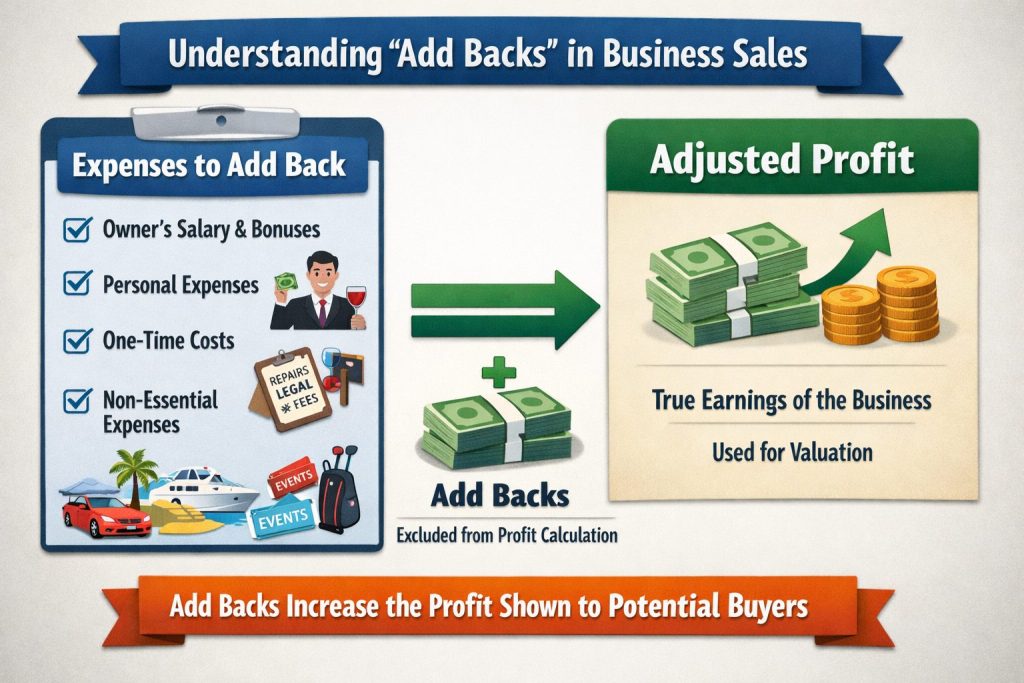
Add-backs are expenses shown in your accounts that do not reflect the ongoing cost of running the business under new ownership.
When calculated correctly, add-backs increase SDE — and therefore increase valuation.
However, poorly justified add-backs are one of the first things buyers and lenders challenge during due diligence.
Based on transactions we see regularly, these are the add-backs buyers typically accept:
If a buyer will replace you, your:
…are usually added back.
Example:
Owner salary: £90,000
Employer pension contribution: £6,000
Add-back: £96,000
These must be clearly identifiable and genuinely one-time.
Examples include:
Buyers will often ask:
“Will this expense exist again next year?”
If the answer is no — it’s usually acceptable.
Expenses run through the business for the owner’s benefit, such as:
These must be reasonable and provable, not aggressive.
If you pay yourself more than a market-rate replacement manager, the excess portion may be added back.
This is common where:
If you can’t prove it historically, it usually doesn’t count.
Most owner-run businesses are valued using a multiple of SDE.
Business Value ≈ SDE × Market Multiple
Typical SDE multiples depend on:
Even a modest increase in SDE can have a multiplied effect on value.
Example:
Increase SDE by £50,000
Apply a 3.5× multiple
Additional value created: £175,000
This is why getting add-backs right matters.
Based on deal experience, the strongest sellers do the following 6–12 months before selling:
Clean SDE builds buyer confidence — and confidence drives price.
During due diligence:
A professionally prepared SDE:
In many cases, proper SDE preparation adds more value than marketing alone.
Seller’s Discretionary Earnings is not an accounting trick — it’s a translation tool that helps buyers understand the real earning power of your business.
Handled properly, add-backs:
Handled poorly, they:
If you’re considering selling, SDE should be addressed early and carefully, not rushed at the point of sale.
One of the first things lenders will examine is your credit history. A solid credit profile significantly enhances your eligibility for SBA loans. Ensure your personal credit score is in excellent shape. Address any outstanding debts, late payments, or discrepancies in your credit report. Demonstrating responsible financial management gives lenders confidence in your ability to manage a business loan.
A well-crafted business plan is more than just a document; it’s your roadmap to success. Lenders will want to see a detailed plan that outlines your business goals, strategies, financial projections, and how you intend to use the loan. This demonstrates your commitment to the business and your ability to manage it effectively. Consider including a thorough market analysis, marketing strategies, and a clear exit plan.
SBA lenders value experience in the industry you’re entering. Showcase your knowledge and expertise in your business plan. Highlight any relevant experience you’ve gained from previous positions, entrepreneurial ventures, or specific training. The more you can demonstrate that you’re well-prepared to run the business successfully, the more attractive you’ll be as a loan applicant.
In addition to your credit history, lenders will want to review your personal financial statement. Provide a clear and accurate picture of your assets, liabilities, and net worth. Be transparent about your financial situation, as lenders appreciate honesty and thoroughness in this regard.
Most SBA loans require a down payment, typically around 10% to 20% of the purchase price. Having a substantial down payment demonstrates your commitment to the business and reduces the lender’s risk. Prepare your finances to ensure you have the required down payment readily available when you apply for the loan.
Lenders will require extensive documentation to process your SBA loan application. Be proactive and organized in gathering the necessary paperwork. This can include tax returns, financial statements, business contracts, and any other relevant documents. Being well-prepared can expedite the application process and demonstrate your professionalism to lenders.
Not all lenders are created equal when it comes to SBA loans. Research and select a lender experienced in SBA lending and who understands the nuances of buying a business. Building a relationship with your lender can also work in your favor. They can provide guidance throughout the process and increase your chances of approval.
Navigating the complexities of an SBA loan can be challenging. Consider enlisting the help of professionals, including business brokers and financial advisors, who are experienced in facilitating these transactions. Their expertise can streamline the process and improve your chances of success.
The SBA loan application process can be time-consuming. Be patient and persistent in following up with your lender and providing any requested information promptly. Your determination to secure the loan can work in your favor.
In conclusion, securing an SBA 7(a) or 504 loan to buy a business requires careful preparation and diligence. By building a strong credit profile, developing a comprehensive business plan, demonstrating your expertise, and working with the right professionals, you can significantly increase your chances of obtaining the financing you need to acquire your dream business. Remember that patience and persistence are key, and a well-organized approach will help you navigate the process successfully.
What are the ways I can minimize tax implications when selling my business?
Minimizing tax implications when selling your business is a crucial aspect of maximizing your overall proceeds from the sale. Here are several ways to mitigate tax liabilities:
One of the most significant tax considerations is how you structure the sale. You can typically choose between an asset sale and a stock sale:
Asset Sale: In an asset sale, you sell the individual assets of your business (e.g., equipment, inventory, customer lists) to the buyer. This can allow for better allocation of the purchase price among various assets, potentially reducing the tax burden. However, keep in mind that you may have to pay taxes at the corporate level for any gains on the sale of assets. Consult with a tax advisor to optimize this structure.
Stock Sale: In a stock sale, you sell the ownership (stock or shares) of your business. This may lead to favorable capital gains
If your business meets certain criteria, you may be eligible for Qualified Small Business Stock (QSBS) benefits. Under Section 1202 of the Internal Revenue Code, you can potentially exclude a portion of your capital gains from the sale of QSBS. To qualify, your business must be a C corporation, meet active business requirements, and satisfy other criteria. Consulting with a tax professional is essential to determine eligibility and benefits.
If you invest the proceeds from the sale in a qualified Opportunity Zone Fund, you can potentially defer and reduce capital gains tax. Opportunity Zones are designated economically distressed areas where investments can offer significant tax benefits. This strategy can be complex and requires adherence to specific regulations, so it’s vital to consult with a tax advisor.
An installment sale allows you to defer the recognition of a portion of your gain over several years. Instead of receiving the full sales price upfront, you agree to receive payments over time. This can help spread the tax liability and reduce your overall tax rate, as you’ll only pay taxes on the payments received in a given year.
While typically associated with real estate, a Section 1031 exchange can also be used for certain types of personal property. This provision allows you to defer capital gains tax by reinvesting the proceeds from the sale into a similar business or investment property. Like other tax strategies, it’s essential to consult with a tax advisor to ensure eligibility and compliance with IRS rules.
Estate planning strategies can help minimize the impact of capital gains tax when selling a business. Gifting shares of your business to family members or placing them in a family limited partnership can reduce the overall tax liability upon sale. Be sure to work with an estate planning attorney to structure these arrangements properly.
Depending on your industry and location, there may be specific tax credits or incentives available to business owners. Research and consider any federal or state programs that could reduce your tax burden.
Converting your business into an ESOP can be a tax-efficient exit strategy. ESOPs are employee benefit plans that buy, hold, and sell company stock on behalf of employees. When structured properly, the sale of your business to an ESOP can result in significant tax benefits.
It cannot be stressed enough: consulting with a qualified tax professional who specializes in business sales and has a deep understanding of your specific situation is crucial. Tax laws and regulations are complex and subject to change. A tax advisor can provide personalized guidance, help you navigate the complexities of tax planning, and ensure you make informed decisions that minimize your tax implications legally and effectively.
Ensure that you maintain thorough records of the entire sale process and any tax planning strategies employed. This includes documenting the sale structure, any tax elections, and the use of any exemptions or credits. Proper documentation is essential in case of an IRS audit.
Remember that tax planning should be an integral part of your overall business exit strategy. By employing these strategies and working closely with a tax professional, you can optimize your tax position and retain more of the proceeds from the sale of your business.

